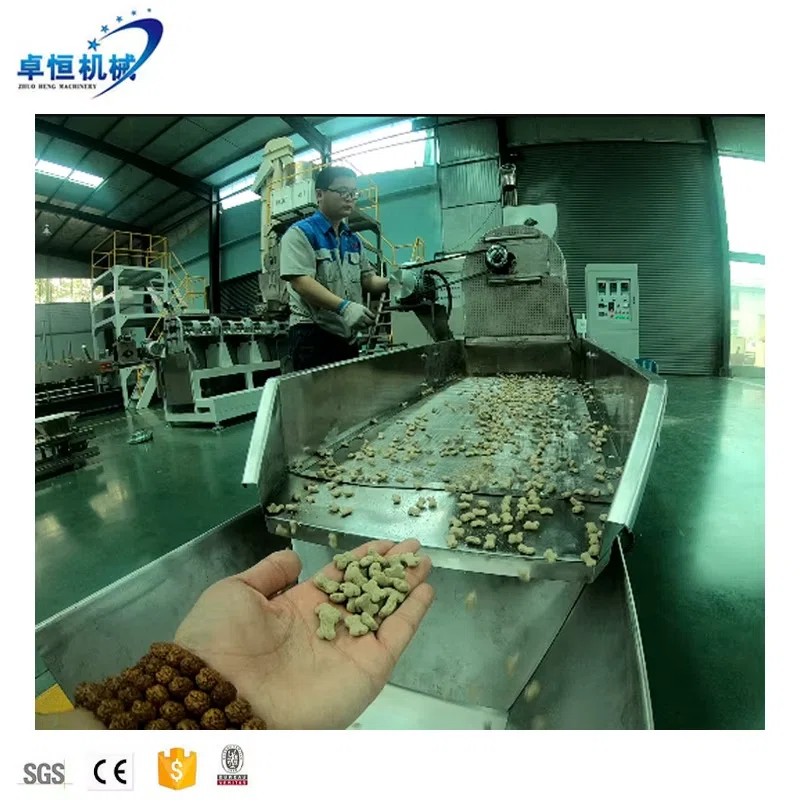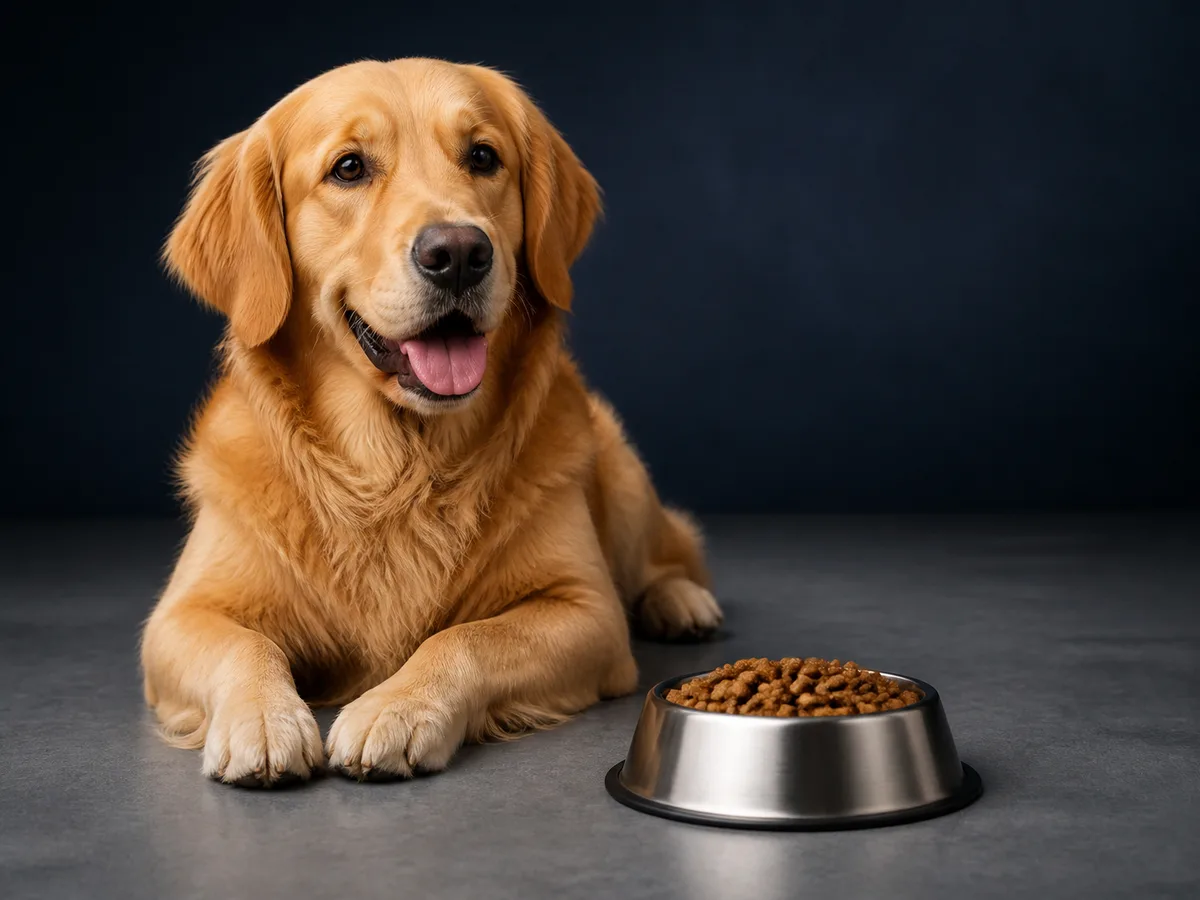
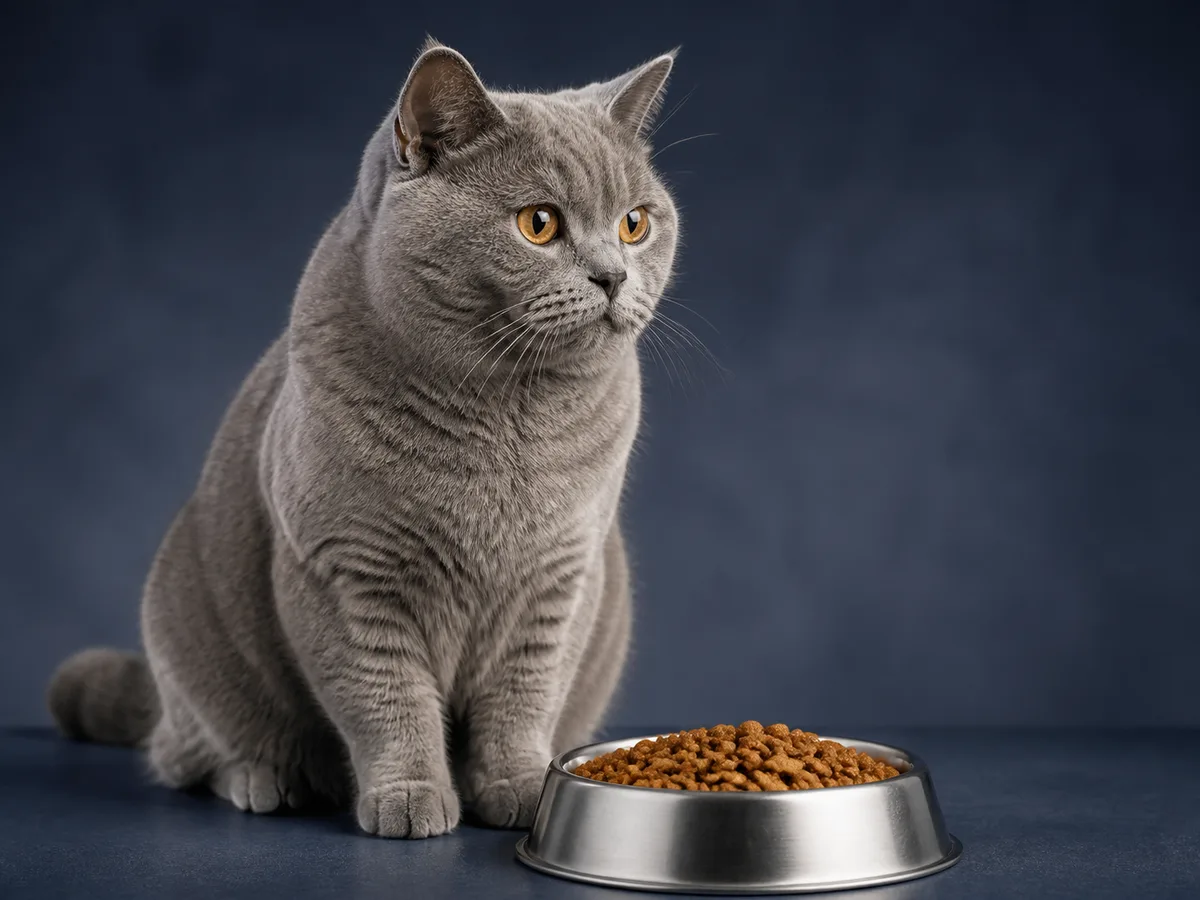
 Dry pet food
Dog & Cat Kibble
Plan profile, diameter, cut length, recipe direction, coating and pack format.
- Dog and cat dry food
- Round, bone and reviewed custom profiles
- Oil or flavor coating as required
Start with the product your customer will buy. Its raw materials, shape, size, density and finishing target determine the correct tooling and process setup on the shared line.
Each guide connects product examples and raw materials to the corresponding process route and equipment configuration.
Dry pet foodPlan profile, diameter, cut length, recipe direction, coating and pack format.
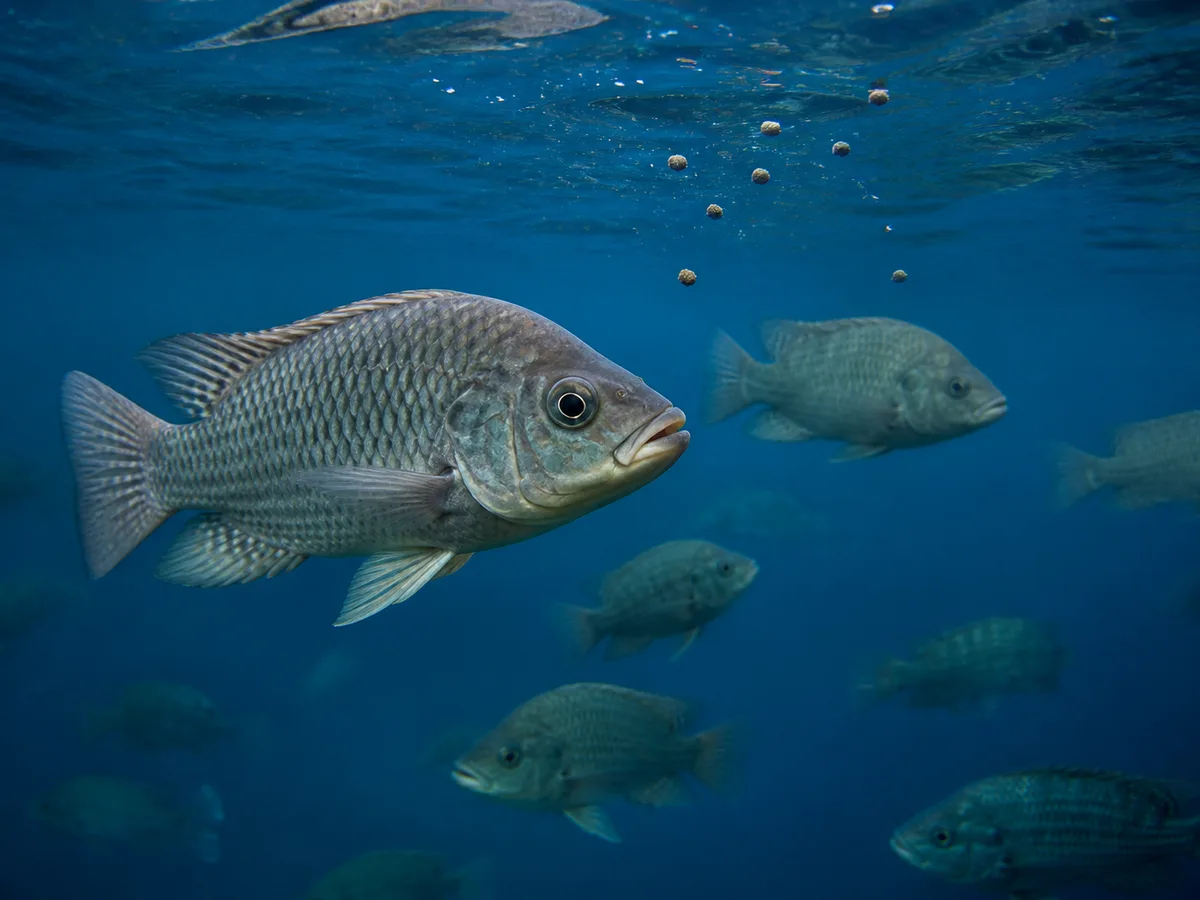 Aquatic feed
Define species, pellet dimensions, buoyancy target, formula status and test method.
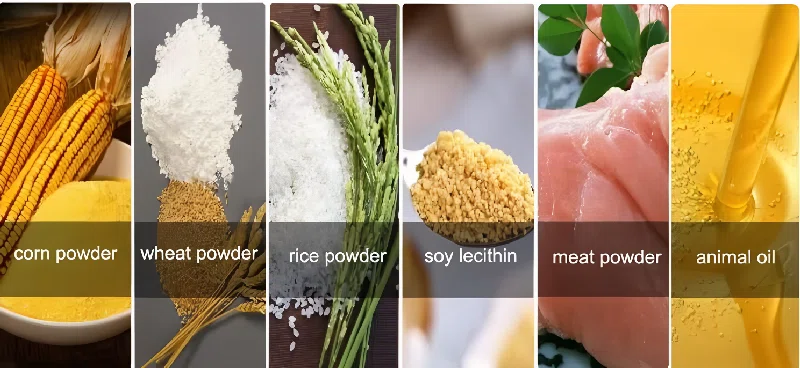 Aquatic feed
Coordinate recipe, grind size, extrusion and drying for the requested sinking behavior.
Material preparation and mixing feed the twin-screw extruder; pellets are then dried, cooled and packed.
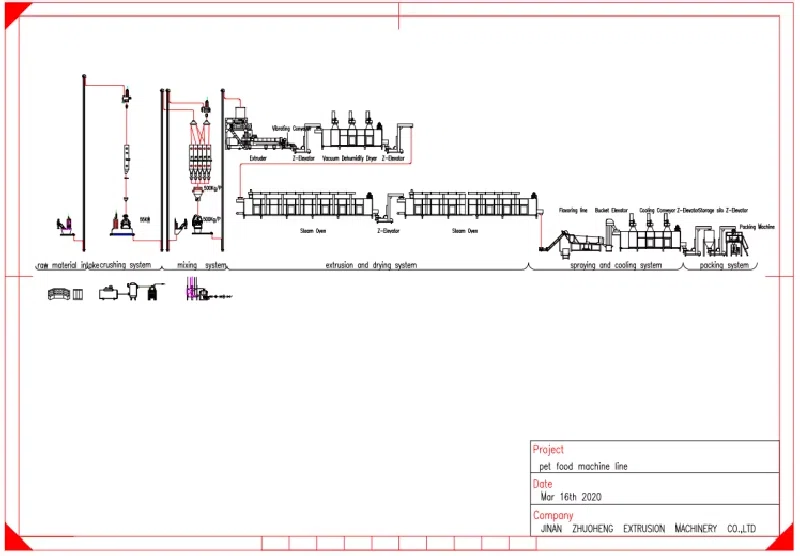
The final sequence and quantities depend on raw-material condition, feed formula, capacity, heating source and automation level.
The line is shared, but a good proposal does not ignore product-specific preparation and finishing.
Die profile, cut length, density target and oil or flavor coating are reviewed against the commercial kibble specification.
See pet food configuration →Formula, grind size, conditioning, screw setup, extrusion and drying work together toward the agreed floating target.
See fish feed configuration →Recipe and operating conditions shift toward the required sinking performance while retaining the same production platform.
Understand mold limits →A clear matrix makes changeover, testing and initial tooling easier to review.