The largest feed extruder is rarely the safest starting point. A useful selection begins with saleable monthly demand, converts it into productive hours and then checks whether preparation, drying, coating, cooling and packing can support the same output.
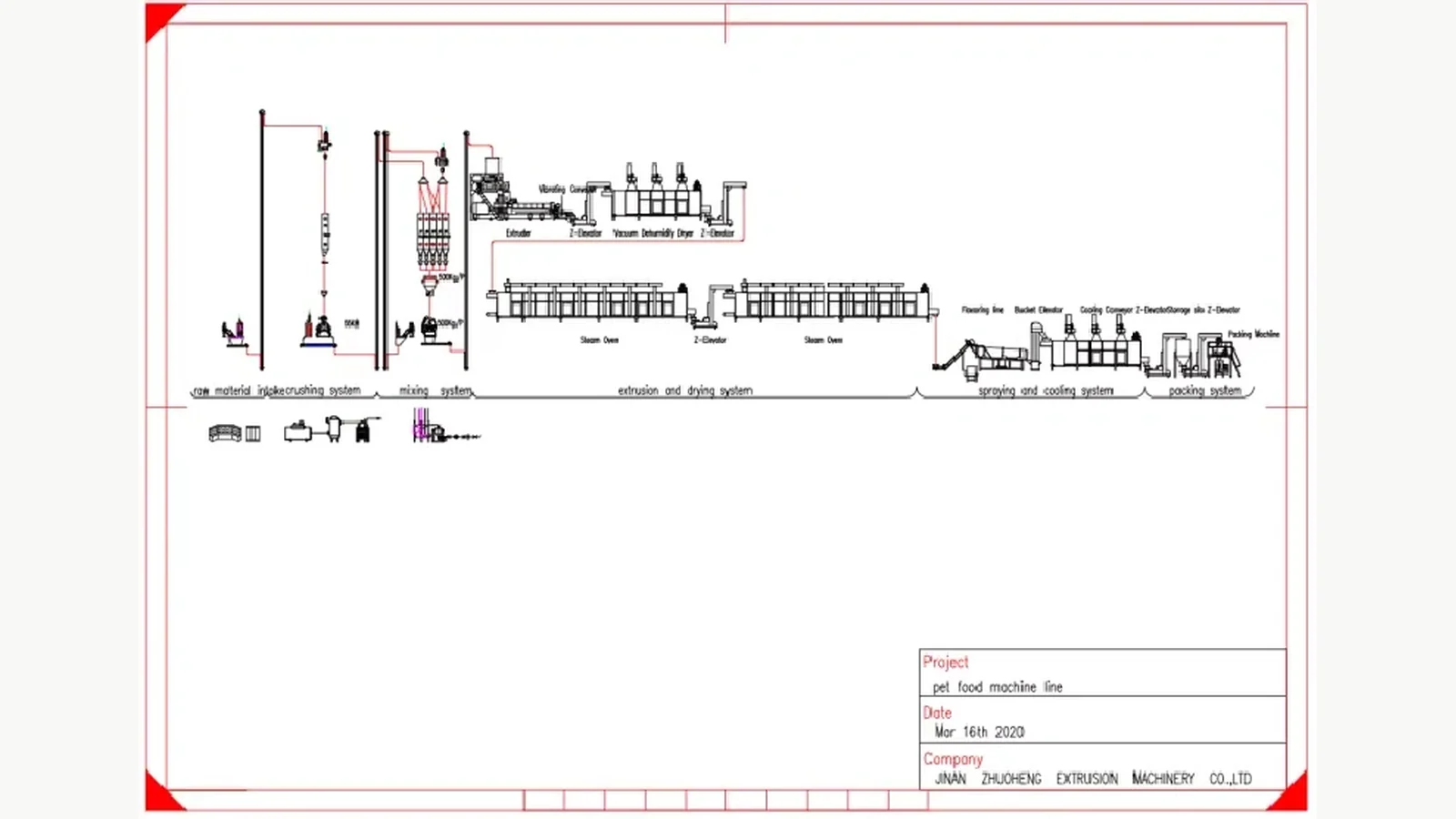
Capacity that is too low can create missed orders and continuous overtime. Capacity that is too high can leave capital idle, make small batches awkward and increase utility requirements before sales justify them. The objective is a line that can meet normal demand with a realistic operating allowance and a defined expansion plan.
Convert Monthly Sales Into Productive Hourly Output
Start with finished feed expected to be sold, not only raw-material input. Use this planning equation:
Required hourly output = monthly saleable kilograms ÷ production days ÷ productive hours per day.
Productive hours are lower than the scheduled shift. Warm-up, shutdown, cleaning, die or mold changes, formula adjustment, maintenance and unplanned stops all consume time.
For example, an 80,000 kg monthly target across 22 days and eight scheduled hours equals about 455 kg/h before downtime. A nominal 500 kg/h line would have little reserve if the factory loses an hour each day to preparation and cleaning. The buyer could add operating hours, consider the next model range or redesign the sales plan; the correct answer depends on product mix and utilization.
Run the calculation for a normal month and a credible peak month. Sizing the whole factory around one exceptional order can be as risky as ignoring seasonal demand.
Define Which Feed Uses the Capacity
“Feed extruder” is not one universal product specification. Fish feed and dry pet food have different product targets and must remain separate technical briefs. For aquatic-feed projects, identify species, growth stage, floating or sinking behavior, pellet diameter, raw materials and formula status. For pet food, define the animal, kibble shape, size, density target, coating needs and formula.
Throughput changes with material behavior, moisture, screw configuration, die opening, cut length and target density. Small or demanding products may operate differently from a standard reference. If several SKUs share one line, state their production shares and identify the product most likely to limit output.
The fish feed production line scope should be used for confirmed aquatic pellets. Pet-food capacity should be reviewed on its own product page and should not be treated as proof for fish-feed performance.
Balance Every Stage Around the Extruder
The extruder cannot deliver saleable output if the dryer or downstream equipment becomes the bottleneck. Capacity review should include:
- raw-material grinding and screening;
- batching and mixing;
- controlled feeding and conditioning;
- extrusion and cutting;
- drying at the required product load;
- optional liquid coating;
- cooling, conveying and packing.
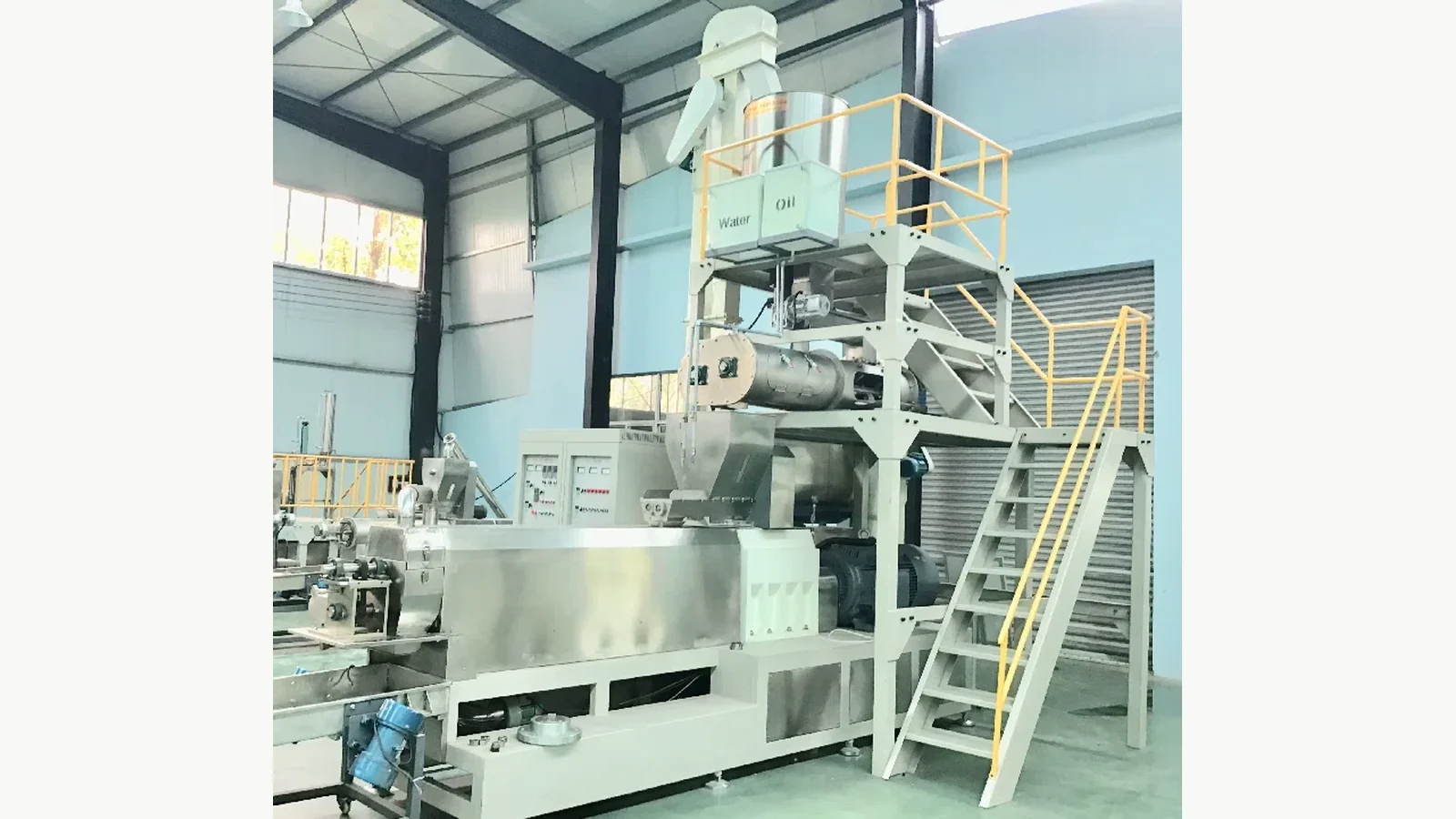
Ask the supplier to state the output basis for every stage. A line described as 500 kg/h should not combine an extrusion figure for one product with a lower drying or packing rate for another. Accumulation between machines is a warning that the complete process has not been balanced.
The budget guide on fish feed plant cost factors shows how equipment boundaries and project responsibilities can make two apparently similar capacity proposals difficult to compare.
Use the Model Table as a Technical Shortlist
Zhuoheng’s confirmed fish-feed model union covers approximately 120 kg/h to 5 t/h. The table is an initial planning reference:
| Model | Reference output | Planning position |
|---|---|---|
| ZH65 | 120–150 kg/h | Small commercial or specialty production |
| ZH70 | 200–250 kg/h | Growing local production |
| ZH85 | About 500 kg/h | Regional commercial output |
| ZH95 | 1000–1200 kg/h | Established medium-scale plant |
| ZH115 / ZH135 / ZH139 | 1500–5000 kg/h range | Higher-volume industrial projects |
Reference output is not a guarantee for every formula, pellet or complete-line configuration. Use the feed extruder model comparison to create a shortlist, then confirm it against the product and factory data.
At the upper end of the range, material logistics become a larger part of capacity planning. Raw-material intake, storage, forklift routes, finished-product holding and truck loading must keep pace with the machine line.
Verify Utilities Before Increasing the Model Size
Higher throughput generally changes installed power, practical demand, heat requirements, conveying size and floor space. Confirm local voltage and frequency, transformer capacity, cable distance, water, compressed air, available heat source, ventilation and any generator limitations.
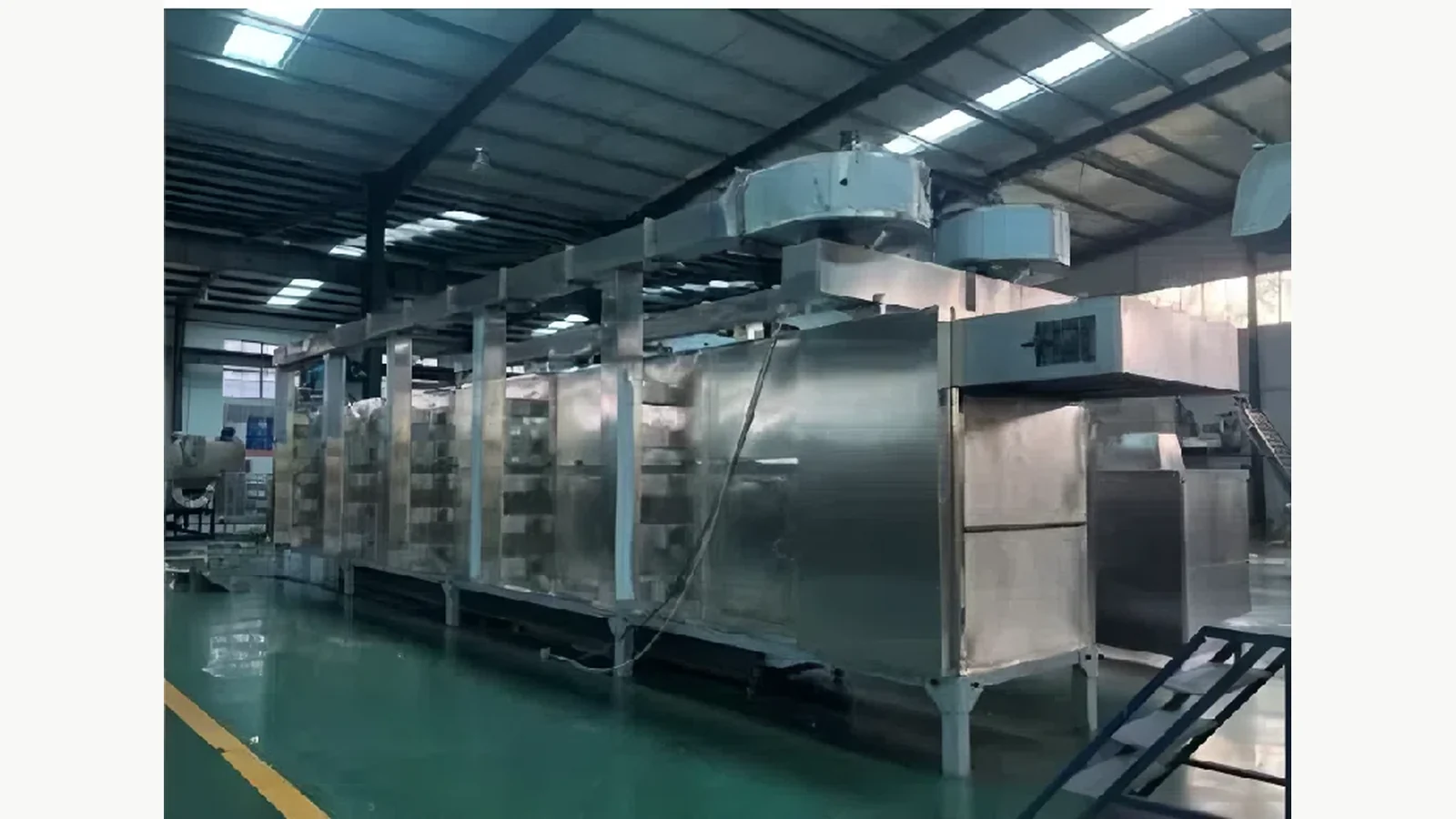
The dryer deserves a separate review because formula, inlet moisture, pellet size and final moisture target affect the thermal load. Its configuration should follow the agreed product and capacity. A photograph can identify the equipment type, but it does not establish drying performance for a buyer’s formula.
Decide How Much Growth Reserve Is Useful
Reserve is valuable when near-term sales are supported by distributor commitments or existing plant data. Excessive reserve can increase investment and reduce efficiency for frequent small runs. Compare three routes:
- run a smaller line for more hours;
- install the next capacity range now;
- reserve space and utility connections for a later expansion.
Also check the minimum practical batch size. A plant with many formulas may benefit from shorter campaigns and easier cleaning rather than the highest theoretical hourly rate.
Send a Complete Capacity Brief
A technical recommendation should be based on:
- monthly, daily and hourly saleable-output targets;
- fish-feed or pet-food product definition;
- formulas, raw materials, pellet or kibble sizes and samples;
- working days, shifts, productive hours and changeover frequency;
- required process stages and packing rate;
- voltage, transformer capacity, heat source and utilities;
- building dimensions, storage plan and destination;
- expected growth and preferred expansion timing.
With those inputs, a supplier can compare the product-limiting case, balance the full process and explain why a model is appropriate. Without them, an hourly capacity number is only a catalog reference.