An extruded feed factory should be planned from the finished product backward. First decide whether the project is for dry dog or cat food, floating fish feed, sinking fish feed, or a defined mix of those products. Then connect demand, formula preparation, extrusion, drying, coating, cooling and packing into one balanced line.
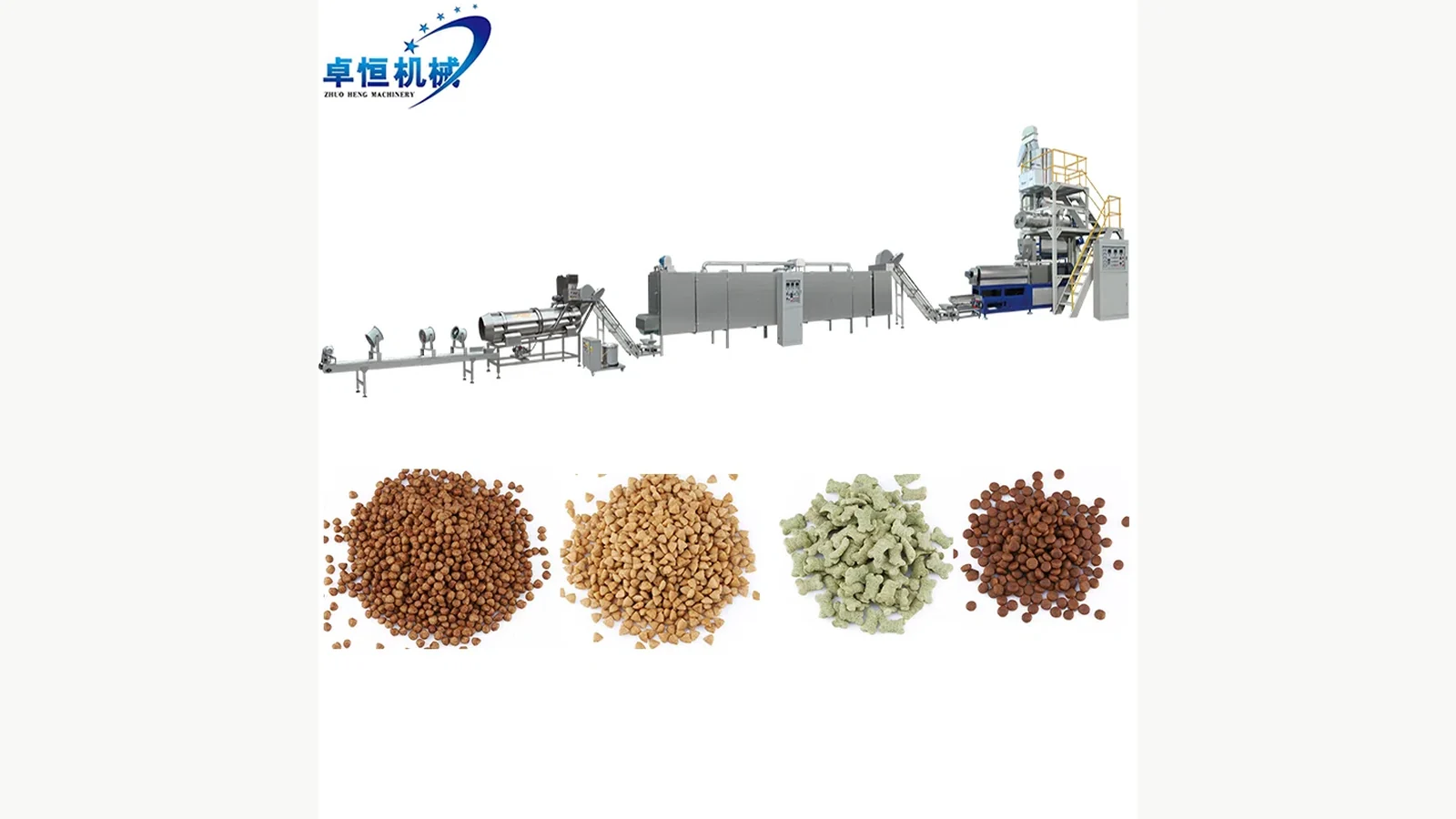
This guide covers Zhuoheng’s confirmed dry pet food and fish feed equipment scope. It is not a general livestock-feed plan and does not set nutritional formulas, floating time, shelf life or a guaranteed production result. Those outcomes depend on product requirements, materials, process settings and responsibilities that must be reviewed for the actual project.
Choose the Product Route Before the Factory Size
“Feed factory” is too broad for equipment selection. A dry pet food project needs a brief for dog or cat kibble, including shape, size, density target, formula status and coating requirements. An aquafeed project needs the species and growth stage, floating or sinking requirement, pellet diameter, raw materials and formula status.
The pet food production line follows a confirmed route of preparation, mixing, conveying, twin-screw extrusion, cutting, drying, oil or seasoning application where required, cooling and packing. The fish feed production line follows preparation and grinding, mixing, conveying, extrusion, cutting, drying, cooling and packing, with coating as a possible option.
These routes share equipment categories, but that does not make the product briefs interchangeable. Keep separate acceptance criteria for pet kibble and aquatic feed, even if the same factory is considering both.
Convert Sales Demand Into a Production Requirement
Start with saleable kilograms per month for each product family. Divide by realistic production days and productive hours, allowing time for startup, shutdown, cleaning, formula changes, die or mold changes and maintenance. The result is a planning requirement, not yet the final machine size.
Then test the requirement against three scenarios:
| Scenario | Question to answer | Planning use |
|---|---|---|
| Normal month | What quantity is routinely sold? | Base operating schedule |
| Credible peak | Which repeatable demand must the factory cover? | Capacity reserve decision |
| Product-change day | How much time is lost to cleaning and changeovers? | SKU and staffing plan |
Zhuoheng’s confirmed pet-food references range from about 120 to 3,000 kg/h across ZH65, ZH70, ZH85, ZH95, ZH115 and ZH135. Confirmed fish-feed references extend from about 120 kg/h to 5 t/h across ZH65, ZH70, ZH85, ZH95, ZH115, ZH135 and ZH139. These are model-family references. Actual selection still depends on the product, raw materials and complete-line balance.
The feed extruder capacity guide provides a more detailed calculation method, while the models and capacities page is the correct next stop for comparing reference ranges.
Balance Every Process Stage
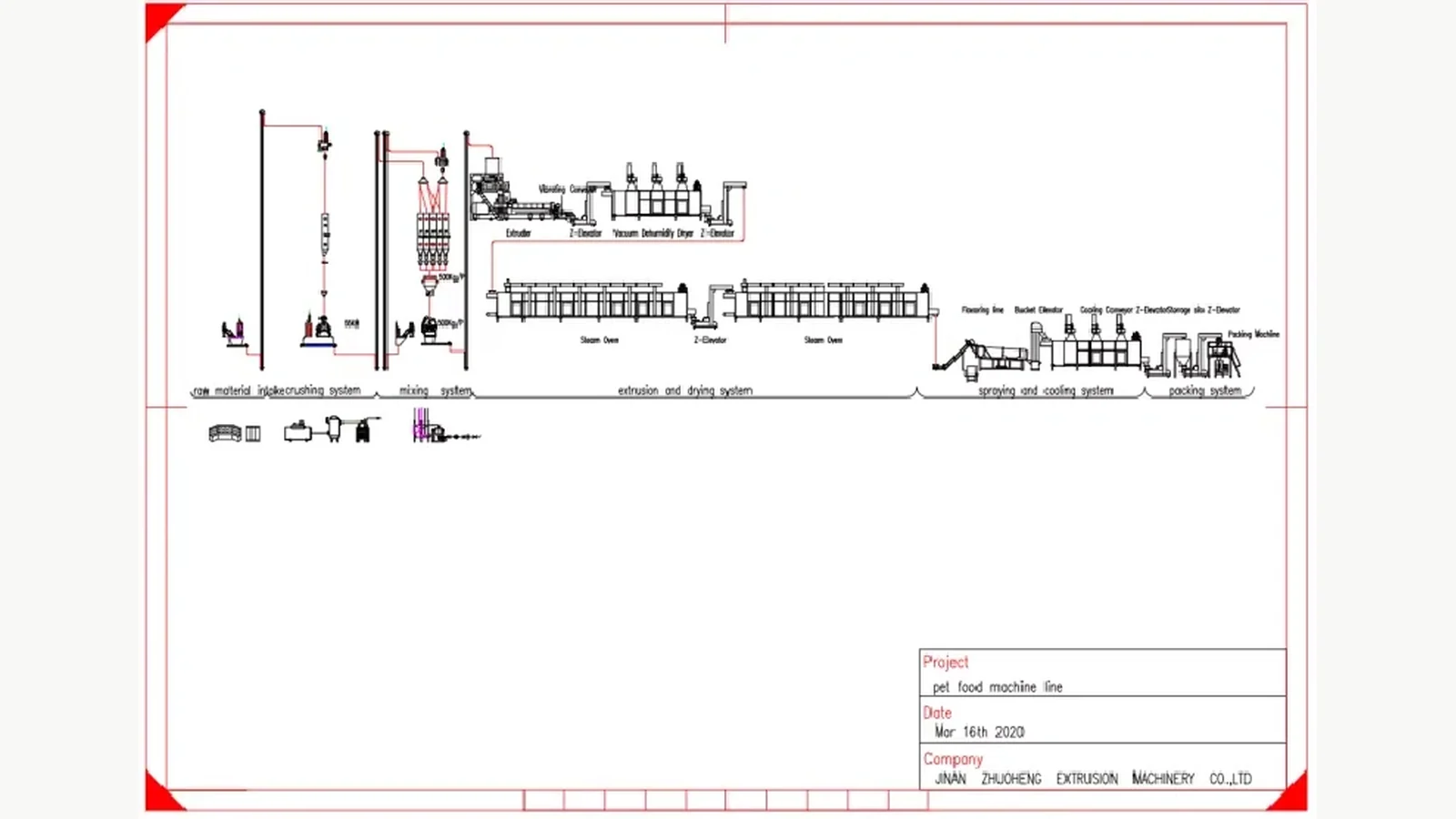
A factory does not produce saleable feed at the extruder alone. A useful line boundary names every stage and identifies whether it is included, optional or handled by the buyer:
- receiving and storing raw materials;
- grinding or other preparation where required;
- weighing and mixing;
- conveying and controlled feeding;
- twin-screw extrusion and cutting;
- drying;
- coating or oil application where required;
- cooling and transfer;
- packing and finished-product handling.
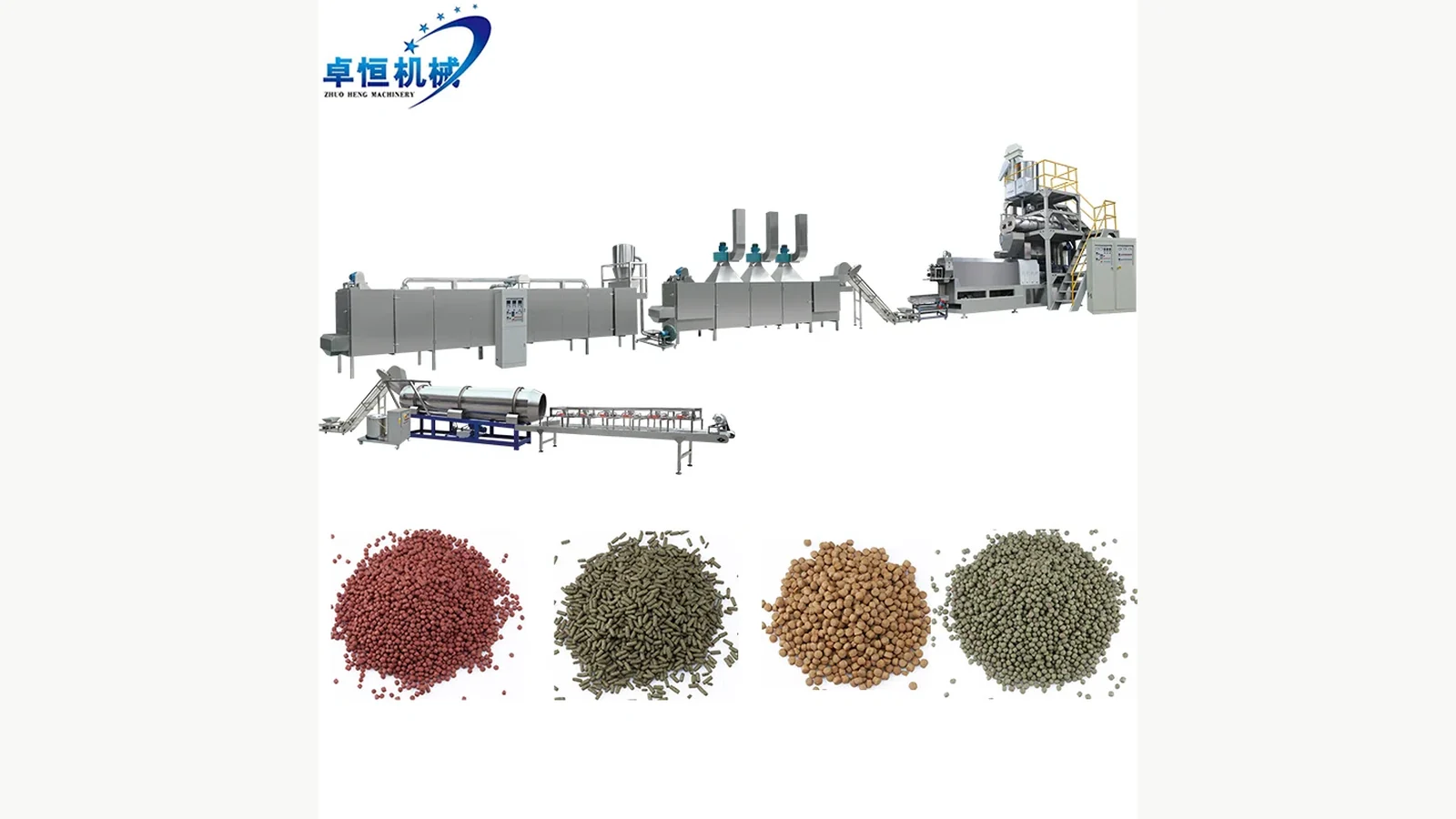
Ask which stage becomes the bottleneck for the most demanding SKU. A dryer sized for one reference product may need a different discussion when pellet size, material behavior or moisture removal changes. Coating and cooling also need to match the operating plan. Nominal extruder output should never be copied into the factory plan without reviewing the rest of the line.
Build a Layout Around Flow and Service Access
Mark the movement of raw materials, people, intermediate product, finished bags and waste. The shortest route is not automatically the best; inspection, cleaning, maintenance and safe access need usable space around the equipment.
A preliminary layout should show:
- usable floor dimensions and ceiling height;
- doors, columns, stairs and restricted zones;
- raw-material and packaging storage;
- mixing, extrusion, drying, coating, cooling and packing positions;
- operator and maintenance access;
- finished-product quarantine or holding area;
- utility entry points and drainage information.
If the factory is still only a building sketch, label dimensions as proposed. This allows equipment and civil assumptions to remain visible rather than becoming hidden changes late in the project.
Confirm Utilities Before the Commercial Quote
Provide the destination country, available voltage, frequency and phase. Identify the intended heating source for thermal stages and any site limitations already known. The supplier also needs to know which utility connections, ducts, pipes, platforms or building works are expected within its scope.
Avoid asking for one universal power or energy figure before the model, process route and heating arrangement are fixed. Equipment references, connected power and normal operating conditions are different concepts. The final quotation should state the basis used for each.
Plan Raw-Material and Product Control Responsibilities
Factory planning must make responsibilities explicit. The buyer normally brings its target product, raw-material information, formula status and local compliance requirements into the discussion. The equipment proposal should state what machines and technical services are included. A formula, nutritional result, floating time or commercial shelf-life claim needs its own evidence and acceptance method; it should not be inferred from the machine name.
Create a small product matrix with one row per SKU. Record species or animal, life stage where relevant, size, shape, floating or sinking requirement, coating need, monthly share and changeover group. That matrix is more useful than a long list of products with no production proportions.
Define Staffing, Changeovers and Commissioning Scope
List the planned shifts, operator roles, maintenance coverage and quality checks. Ask which tasks are manual, semi-automatic or automatic in the offered configuration. Also record who supplies lifting equipment, utility connections, test materials and local labor during installation and commissioning.
For a multi-product factory, arrange the schedule to reduce unnecessary formula, color, size or coating changes. The exact sequence belongs to the buyer’s production plan, but it influences hopper cleanout, die preparation, retained material and usable hours.
Factory Planning Checklist for the RFQ
Prepare these inputs before asking for a complete proposal:
- dry pet food, floating fish feed or sinking fish feed scope;
- target species or animal and product dimensions;
- raw-material list and formula status;
- normal and peak monthly saleable demand;
- productive hours, shifts and SKU shares;
- required preparation, extrusion and downstream stages;
- coating, cooling and packing expectations;
- building drawing and material-flow constraints;
- voltage, frequency, phase and heating-source information;
- destination, supply boundary and commissioning responsibilities.
Budget comparisons should use the same boundary. The fish feed plant cost guide explains why preparation, drying, coating, utilities and services can change a complete-project quotation.
Submit the product matrix and site sheet through the request-a-quote page. Zhuoheng can then identify the confirmed equipment route and the remaining technical questions before a line is finalized.