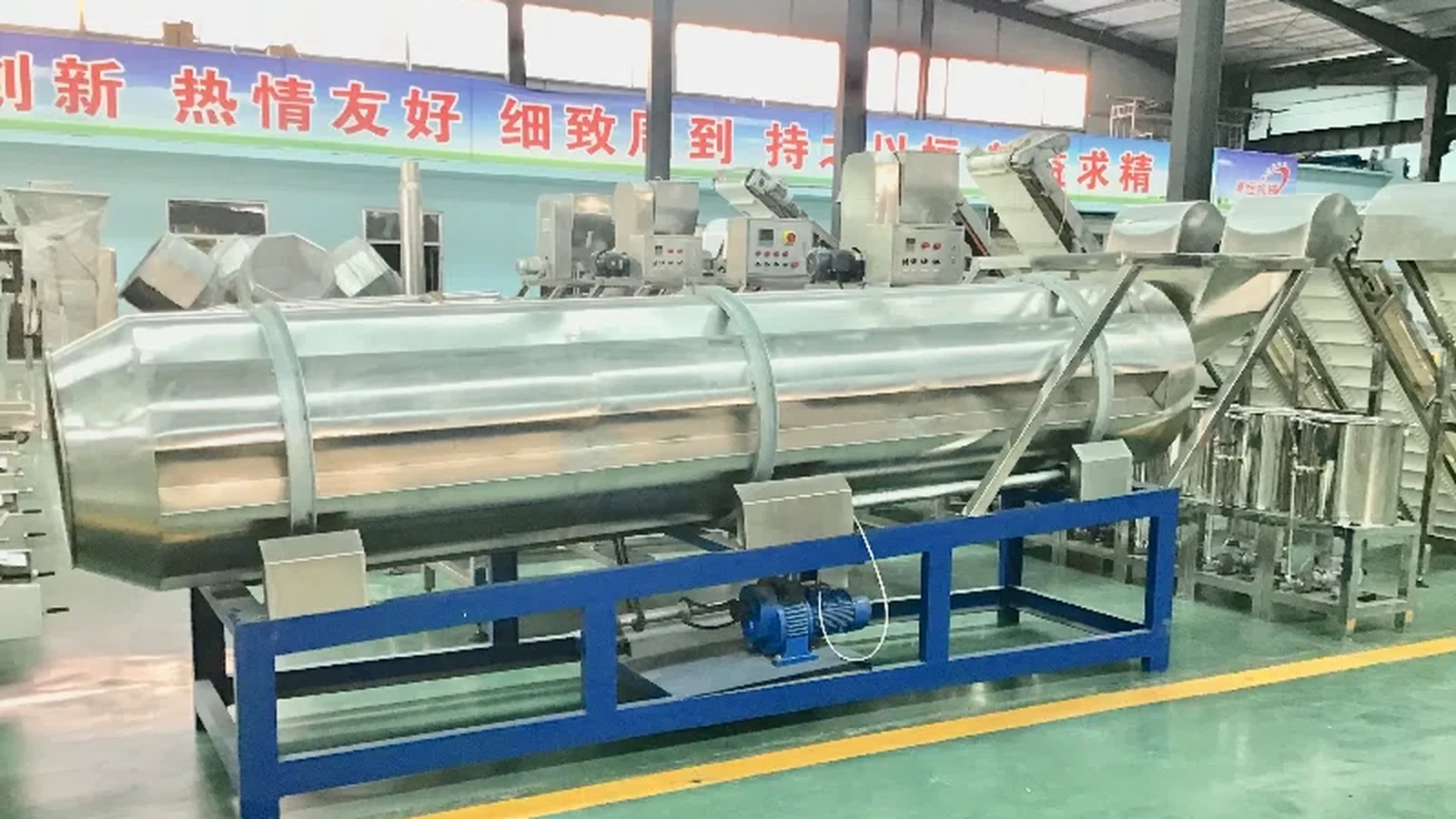
Oil coating and flavoring happen after the core extrusion and drying stages, but they should not be specified as a detached accessory. The coating system receives pellets with a particular size, surface, temperature and moisture condition. It must handle the intended liquid and powder inputs, match the line flow and deliver product to cooling or packing under controlled conditions.
This article is limited to confirmed dry dog and cat food projects. It does not establish a poultry-feed line, a baked pet-treat process or an unconfirmed animal-feed application. Formula ownership, nutritional claims and food-safety requirements remain with the buyer and its qualified technical team.
Define the Pellet Before the Coating Equipment
Send the pellet description at the coating inlet. Include animal and product type, visible profile, dimensions, approximate bulk behavior, formula status and the production stage immediately upstream. A product photograph is useful, while a retained sample and dimensioned record are stronger.
The pet food production line covers the confirmed dry dog and cat food route: preparation and mixing, conveying, extrusion and cutting, drying, flavoring or oil coating, cooling and packaging. That sequence is a scope reference. Exact stage order, transfer arrangement and operating settings still depend on the project.
Pellet condition matters because the coating stage acts on the product surface. Shape, size, porosity, temperature, moisture condition and handling strength can change how pellets move and how an ingredient is applied. No absorption percentage, coating uniformity or palatability result should be promised from equipment appearance alone.
Write Separate Inputs for Oil and Dry Flavoring
“Coating” may combine liquid application, dry flavoring or both. List each ingredient stream separately. Identify the approved liquid type, its handling condition and the buyer's recipe basis. For dry flavoring, provide the material characteristics relevant to feeding and distribution. The supplier can then review pumps, tanks, dosing, drum or mixer and transfer scope without inventing a recipe.
Use a clarification table:
| RFQ item | Buyer input | Review outcome |
|---|---|---|
| Pellet | Sample, profile, dimensions and inlet condition | Establishes the handled product |
| Liquid | Ingredient identity, handling condition and recipe basis | Defines the liquid-system discussion |
| Powder | Ingredient characteristics and dosing basis | Defines dry-feeding requirements |
| Throughput | Required hourly flow and expected variation | Supports line balancing |
| Changeovers | Product sequence and cleaning requirement | Supports access and scheduling review |
| Acceptance | Sampling method and buyer-defined limits | Replaces a vague “uniform coating” promise |
An ingredient percentage by itself is not an equipment specification. It must be tied to the product flow and the buyer's measurement basis. If several recipes will be produced, record each recipe family and the expected order sequence rather than asking for one universal setting.
Confirm the Dryer-to-Coater Handoff
The upstream dryer and transfer section determine what enters the coating stage. Record pellet temperature and condition at discharge, transfer distance, elevation and any buffer. If those data are not yet available, mark them as confirmation items in the proposal instead of filling the gap with an assumption.
The extruded pet food or fish feed factory planning guide explains why each stage must be balanced around the actual product matrix. For this article's scope, keep the product brief on dry pet food even if some equipment categories also appear in aquatic-feed projects.
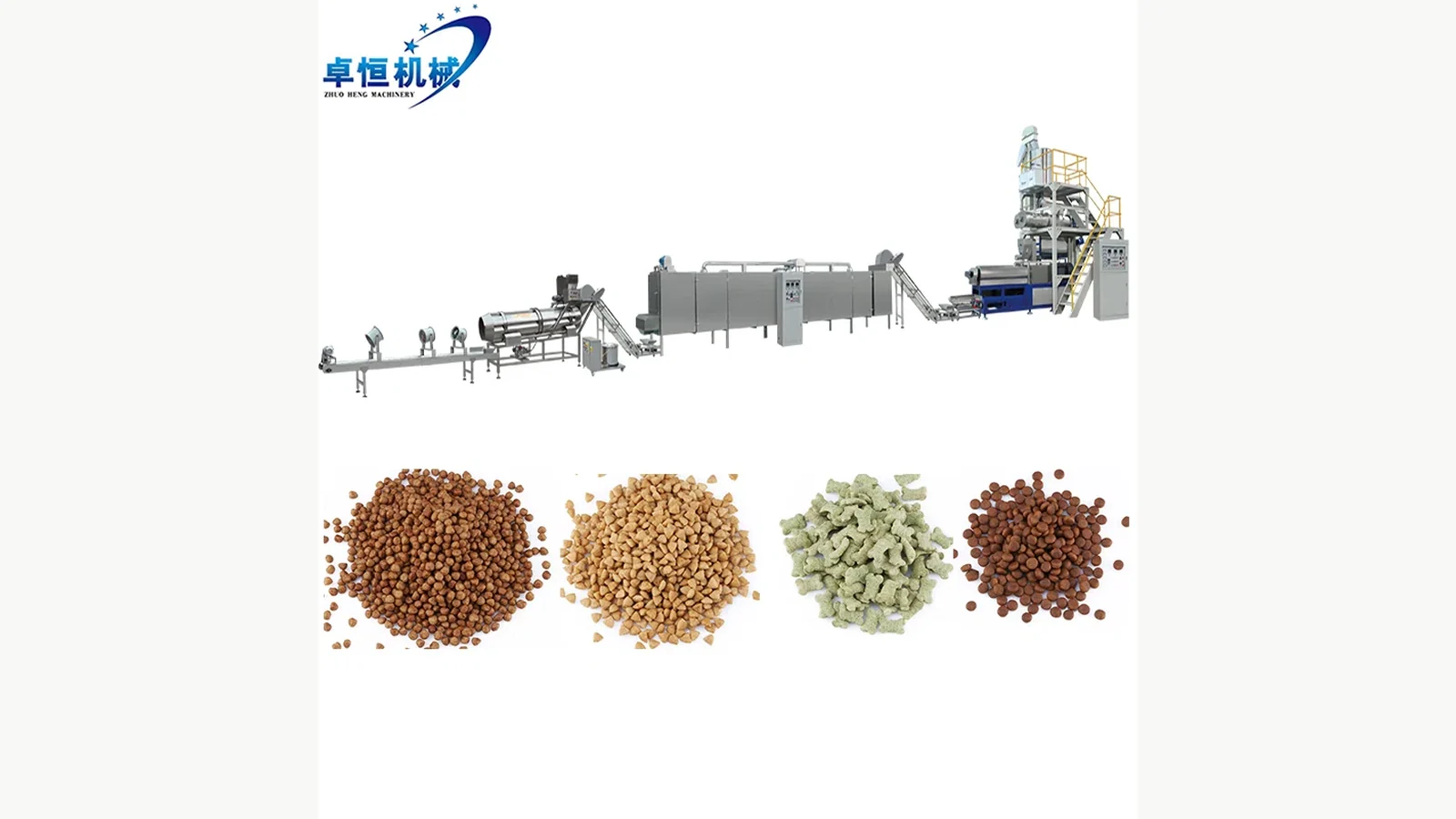
Downstream, define whether coating is followed by cooling, holding, screening or direct transfer toward packing. State the packing feed height, required buffer and expected product temperature at packing. These interfaces affect conveyors and layout even when the coating drum itself does not change.
Balance Flow Without Converting a Rating into a Guarantee
Required hourly flow should be stated for the finished pet food and formula being discussed. Extruder output, dryer loading, coater flow and packing speed must be reviewed together. A nominal figure from one machine should not be presented as guaranteed packed output for every kibble.
Include daily demand, planned productive hours, cleaning time, product changes and expected downtime in the production plan. The feed extruder capacity guide separates nameplate thinking from a balanced line calculation and helps buyers prepare the supporting demand data.
When comparing quotations, normalize:
- the pellet and formula basis used for the flow discussion;
- liquid storage, pumping, heating or mixing scope where required and confirmed;
- powder feeding and coating equipment included;
- transfers between drying, coating, cooling and packing;
- controls, instruments and buyer-supplied interfaces;
- cleaning access and changeover assumptions;
- trial, training and documentation scope;
- exclusions and items awaiting confirmation.
Build Cleaning and Recipe Changes into the Project
Dry pet food projects may change animal segment, shape, formula, oil or flavoring. Ask how product-contact areas are accessed and how remaining material will be identified. The exact cleaning method must come from the supplied equipment documentation and the buyer's sanitation and allergen-control program.
Record who releases the equipment after cleaning, how startup product is segregated and which recipe reference is used for restart. A universal cleaning or changeover time would be misleading. Actual time depends on the equipment configuration, material, site procedure and required inspection.
Agree on Trial Evidence Before Approval
A trial should use the buyer's actual or representative pellet and ingredients where practical. Before the run, agree the sample quantity, formula reference, target throughput and inspected outputs. Visual appearance can be one check, but the technical team may also need to assess dosing records, pellet damage, powder loss, liquid use, product temperature and downstream handling.
Keep any approval limited to the tested product, recipe, flow and settings. One successful sample does not prove every future kibble, formula or operating rate. Retain the sample, photos and test record that support the quotation and later configuration review.
RFQ Checklist for a Dry Pet Food Coating Stage
Send the supplier:
- dog or cat food product and intended market use;
- pellet sample, photos, shape and dimensions;
- formula status and raw-material overview;
- expected condition after drying;
- liquid and dry-flavoring ingredient requirements;
- buyer-defined dosing basis and acceptance method;
- required hourly output and operating schedule;
- product matrix and changeover sequence;
- upstream discharge and downstream packing interfaces;
- site layout, utilities, voltage, frequency and phase;
- destination and requested equipment, documentation and training boundary.
Submit this package through the request-a-quote page for a product-specific review. A useful proposal should distinguish confirmed equipment, optional scope and the items that remain subject to samples or engineering confirmation.